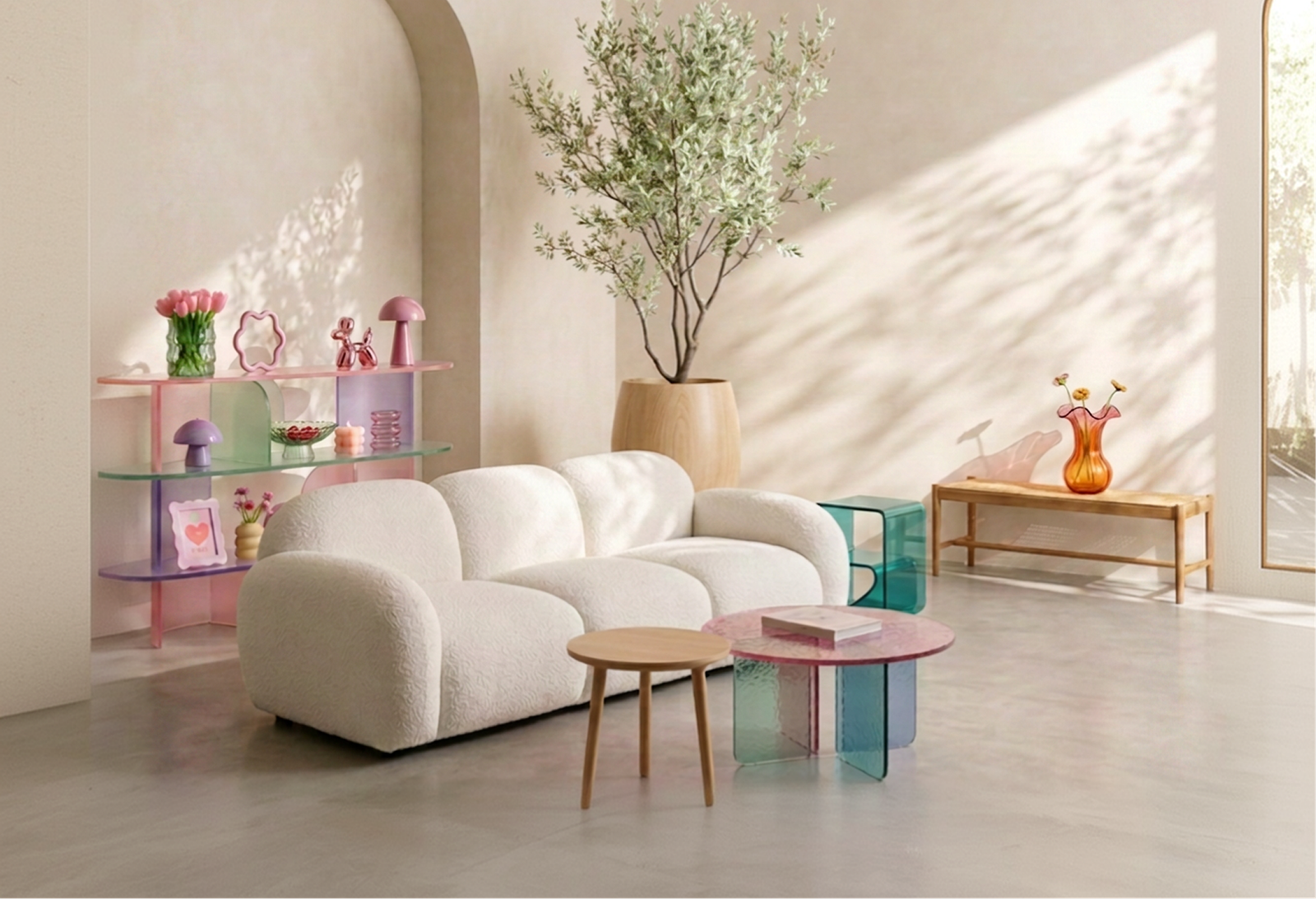
A layered interior feels collected over time rather than purchased all at once.
The Art of Mixing Furniture Without Matching Everything
Some of the most interesting interiors are built from pieces that were never designed as a matching set.
Different woods, fabrics, forms, and periods can work beautifully together when there is enough visual connection between them.
Choose a common thread
Your furniture does not need to match, but it helps if something connects the pieces.
That connection could be a similar color temperature, repeated material, curved shapes, or consistent proportions.
Mix shapes
Pairing contrasting forms can make a room feel more natural.
A structured sofa, for example, can work beautifully with a softer rounded chair or sculptural side table.
Vary materials carefully
Wood, metal, stone, glass, and upholstery can all coexist in the same room.
Instead of using every material equally, choose one or two dominant finishes and use the others as accents.
Avoid buying everything at once
A home often feels more personal when it develops gradually.
Start with the essential furniture and allow yourself time to discover what the room needs next.
The result should feel collected rather than coordinated — a space shaped by your taste, routines, and the objects you choose to live with.